Desert Landscape with Cactus and Rocky M: A Versatile Visual Resource for Creative and Professional Projects
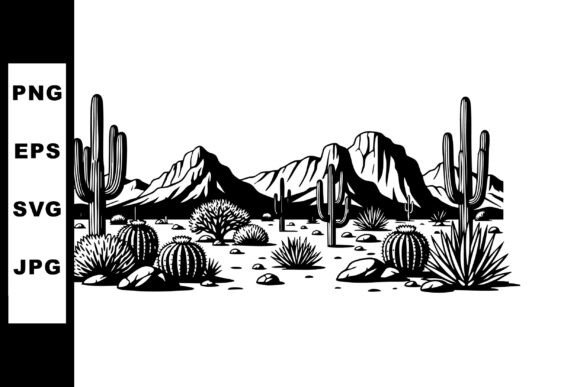
The Desert Landscape with Cactus and Rocky M illustration offers a minimalist, black-and-white depiction of a desert scene featuring cacti, bushes, rocks, and distant mountains. This visual asset is more than just an aesthetic representation—it serves as a functional component in a range of creative and professional workflows. Whether used in digital design, print media, educational materials, or branding, this illustration supports a calm, natural visual tone that can enhance the clarity and professionalism of a project.
Understanding the Visual Composition
The Desert Landscape with Cactus and Rocky M illustration is intentionally rendered in black and white, allowing for maximum flexibility in integration. The composition includes a variety of desert elements—cacti, shrubs, rocky terrain, and distant mountain outlines—each drawn with clean lines and balanced spacing. This ensures the image remains visually engaging without being overwhelming or distracting.
Its monochrome style makes it particularly useful for projects that require a neutral background or a thematic visual anchor. Designers and content creators can layer additional graphics or text over it without color conflict, and its simplicity supports a wide range of stylistic interpretations.
Integration into Creative and Business Workflows
This type of illustration can be introduced at various stages of a project lifecycle. In the early planning phase, it can serve as a visual reference or mood board element to help define the tone of a design or branding effort. During the execution phase, it can be embedded directly into layouts for websites, presentations, or marketing materials. Post-launch, it may be repurposed for social media posts, educational infographics, or printed collateral.
For example, a digital marketer working on a wellness brand campaign might use the Desert Landscape with Cactus and Rocky M as a background for a landing page, leveraging the natural imagery to reinforce themes of tranquility and resilience. A teacher creating a geography lesson could incorporate the illustration into a slide deck to visually represent desert ecosystems.
File Formats and Compatibility
The downloadable ZIP package includes SVG, EPS, JPG, and PNG files, each serving a specific use case. SVG and EPS formats are ideal for scalable vector graphics, ensuring crisp visuals at any size—perfect for logos, icons, or responsive web design. JPG and PNG files provide pixel-based alternatives suitable for print, presentations, or web platforms that do not support vector formats.
- SVG: Best for web use, especially when interactivity or responsiveness is required.
- EPS: Preferred for high-quality print output and compatibility with design software like Adobe Illustrator.
- JPG: Ideal for embedding in websites or documents where file size matters.
- PNG: Useful when transparency is needed or when preserving sharp edges is essential.
Choosing the correct format depends on the intended application and the platform or software being used. Maintaining a consistent file naming system and organizing these assets in a centralized media library can streamline their use across multiple projects.
Workflow Examples and Practical Implementation
Consider a freelance graphic designer working on a client’s website redesign. The Desert Landscape with Cactus and Rocky M could be used as a hero image on the homepage, resized and optimized using SVG format for responsive display. The designer might layer text and call-to-action buttons over the image, relying on its minimalistic style to avoid visual clutter.
In another scenario, a small business owner launching a new line of natural skincare products could integrate the illustration into packaging designs or promotional materials. The black-and-white aesthetic aligns well with minimalist branding, and the desert imagery subtly communicates themes of purity, endurance, and organic ingredients.
For educators or content creators producing online courses, this illustration can serve as a visual aid in modules discussing environmental science, landscape design, or artistic techniques. The JPG or PNG versions can be easily imported into slide decks or course platforms without requiring advanced editing tools.
Usability and Long-Term Value
One of the key advantages of the Desert Landscape with Cactus and Rocky M illustration is its timeless quality. Unlike trend-driven visuals that may become outdated, the simplicity and neutrality of the image ensure long-term usability. It can be repurposed across different projects, seasons, and industries without losing relevance.
However, to maximize its value, users should consider implementing a few best practices:
- Consistency: Use the illustration in alignment with your brand’s visual language to maintain a cohesive look.
- Accessibility: Ensure sufficient contrast when overlaying text, especially when using the image as a background.
- Version Control: Keep a master folder with all file types labeled clearly for quick retrieval.
- Licensing Awareness: Confirm that the illustration is cleared for the intended use, especially if it will be used commercially or modified.
Connecting with Other Tools and Resources
This illustration works well alongside other design tools and assets. For instance, it can be combined with typography kits, color palettes, or UI kits to build a complete visual system. Designers using platforms like Figma, Sketch, or Canva can import the SVG or PNG files directly into their projects for seamless integration.
Additionally, the Desert Landscape with Cactus and Rocky M can be paired with stock photography, icon sets, or pattern libraries to create layered compositions without overwhelming the viewer. When used in conjunction with a design system or style guide, it contributes to a unified brand experience across digital and print media.
Quality Control and Adaptability
Maintaining visual quality is essential when working with any digital asset. Because the illustration is provided in multiple formats, users can ensure fidelity across different applications. When scaling the image for large-format prints or web banners, it’s important to preview the output at actual size to confirm clarity and detail retention.
For teams or organizations that reuse visual assets frequently, implementing a digital asset management (DAM) system can help track versions, usage rights, and design variations. This ensures that the Desert Landscape with Cactus and Rocky M remains accessible and properly utilized over time, reducing duplication of effort and maintaining brand consistency.
Final Thoughts on Implementation
The Desert Landscape with Cactus and Rocky M illustration is more than a static image—it's a flexible visual tool that can support a wide array of creative and professional needs. By understanding its structure, file options, and integration potential, users can make informed decisions about how to incorporate it into their workflows effectively.
Whether used in branding, education, digital design, or print production, this illustration offers a clean, natural aesthetic that complements a variety of content types. With thoughtful implementation and organization, it becomes a valuable asset that contributes to both the visual appeal and functional clarity of a project.